
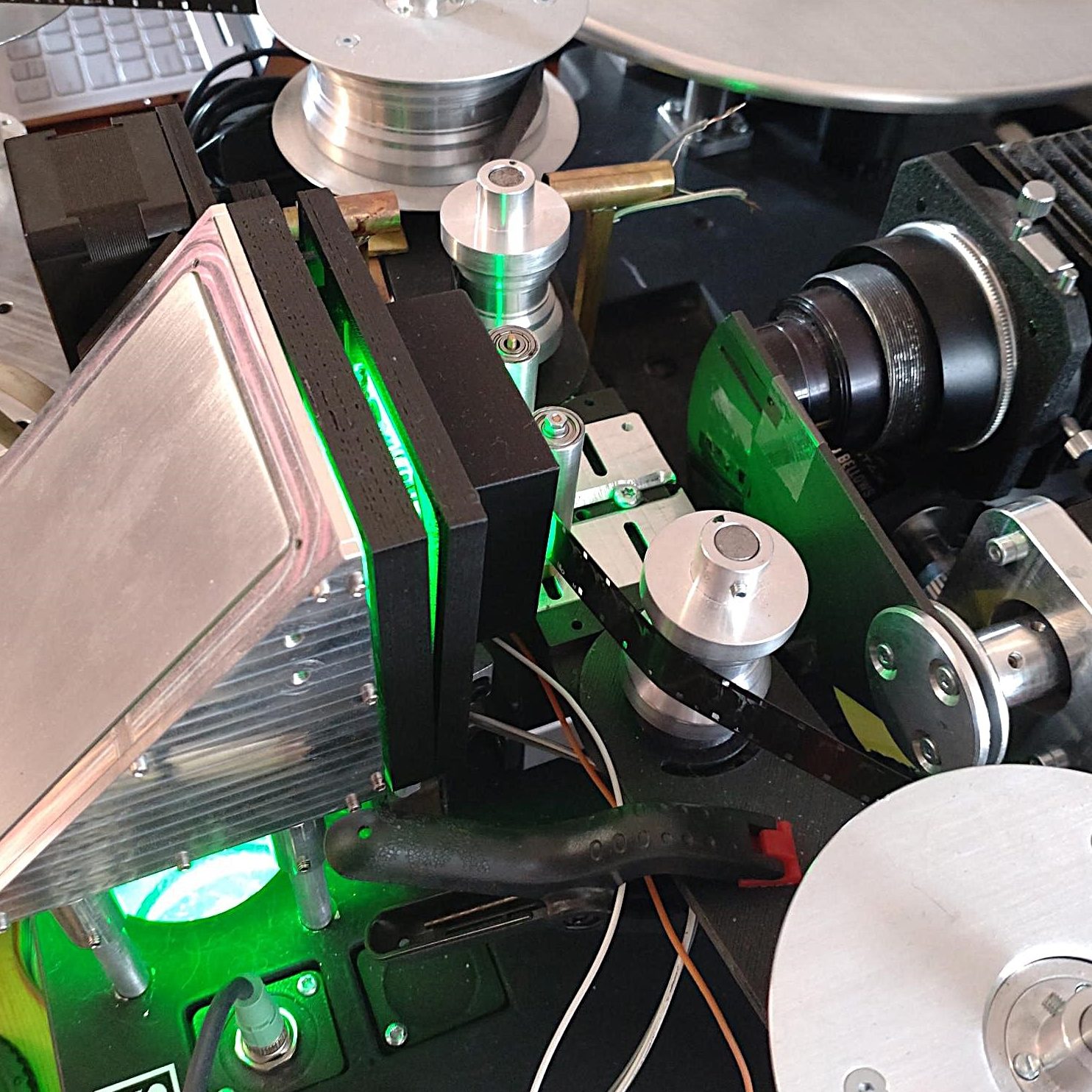
In summer semester 2025, a teaching project for the Audiovisual and PhotographicCultural Heritage – Modern Media program at HTW University of Applied Sciences Berlin took place for the first time at the Berlin branch of the renowned US-Swiss company Scan2Screen. Under the guidance of founding member Lutz Garmsen as lecturer (https://scan2screen.com/#team), three students were able to explore the company’s cutting-edge modular, multispectral scanner. This system allows scanning of film materials in their actual color appearance for the first time and opens the way to scientifically sound reconstruction of film colors through tailored spectral detection of their unique characteristics.
Lenticular Film
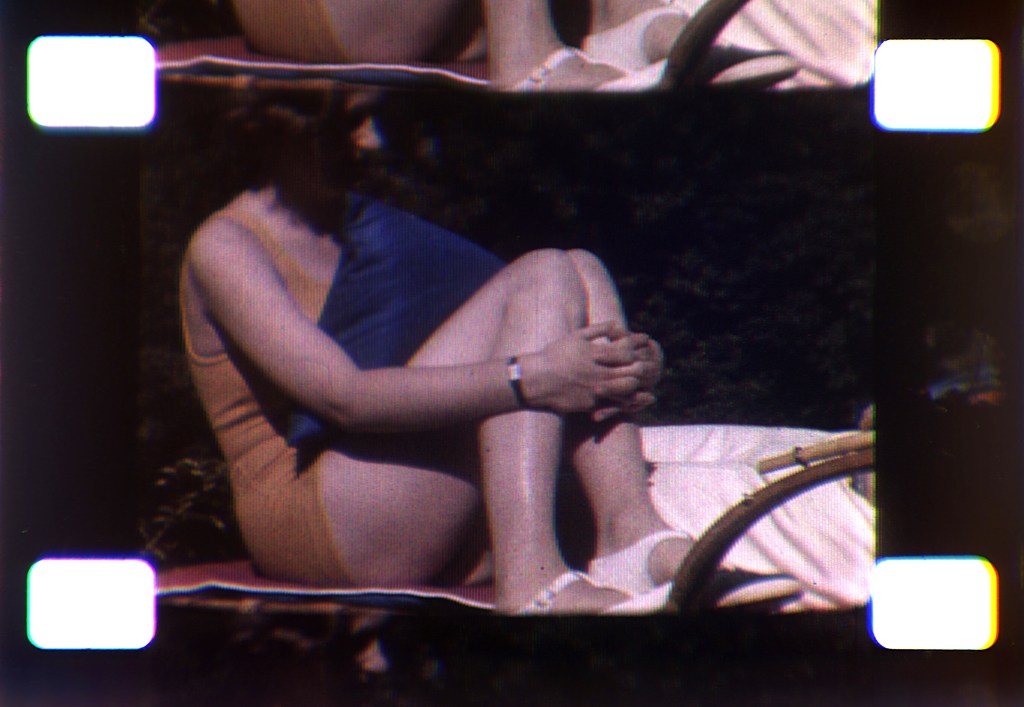
Emma Kochta dedicated herself to the digitization of a 16mm lenticular film, one of the first home movie formats in color, produced by Kodak from 1928 to the late 1930s. Hundreds of vertical cylindrical lenses, imprinted on the film base, encode the color information on a black-and-white panchromatic silver emulsion. This format places special demands on digitization, requiring specialized equipment and technical expertise. High resolution is essential to capture the strips precisely. The film must be loaded flat and aligned so that the cylindrical lenses are exactly perpendicular to the optical axis of the camera, and the lighting must be directed to make the structure clearly visible. Scanning is done in grayscale and losslessly, without automatic image processing. The encoded color information is then digitally analyzed, broken down into individual color channels, and recombined into a full-color image.
I was particularly impressed by how much attention to detail has gone into every step of the process, from the construction of the scanner to the development of the scanning methods. Lutz Garmsen was always open to our own ideas, and it was really motivating that we were able to work on a process in development. The whole thing not only gave me practical insights into state-of-the-art scanning techniques, but also showed me how creative, flexible and at the same time meticulous work in film restoration can be.
Emma Kochta
Hand-painted Experimental Film
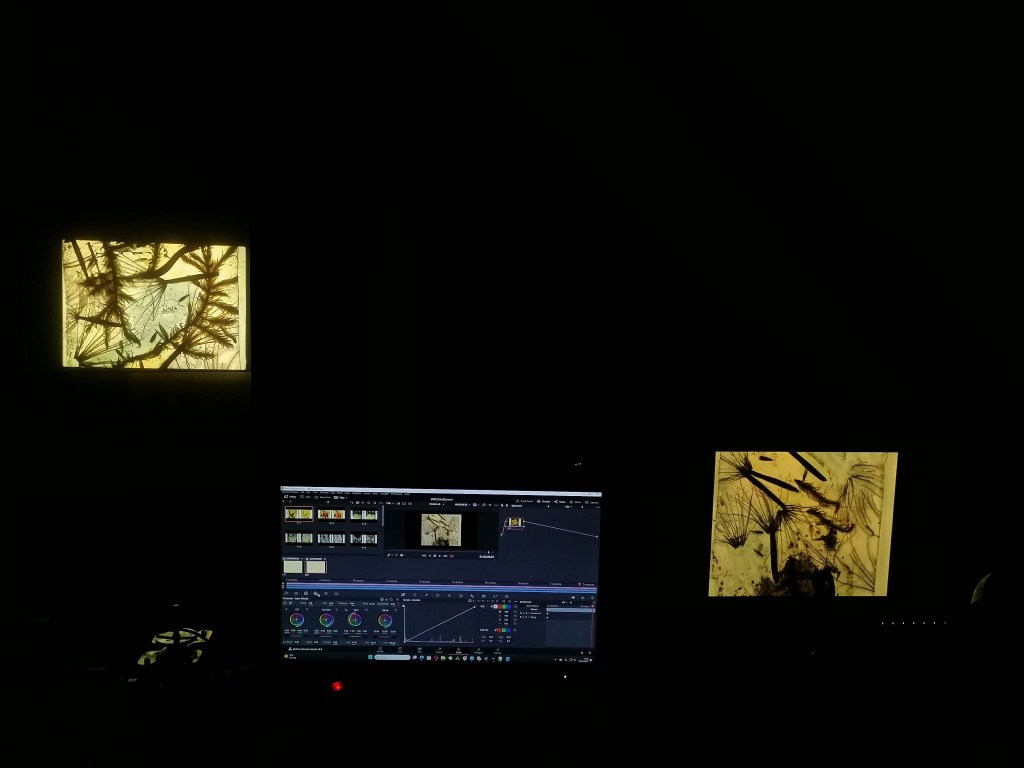
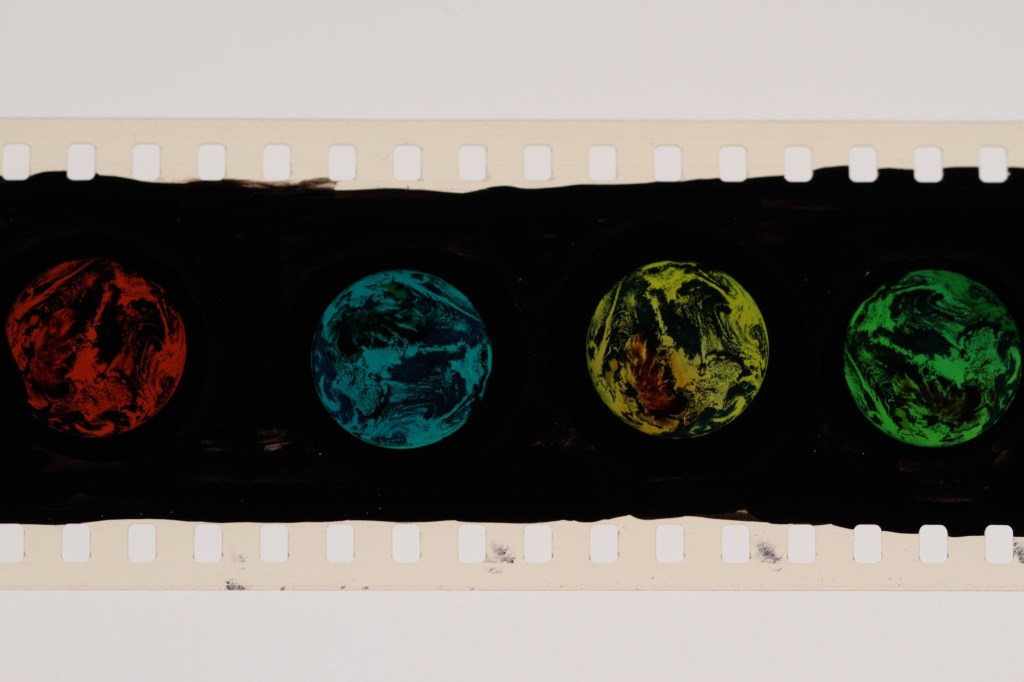
LUKAS KLEINE WELTMASCHINE (DEU 1993, Ursula Helfer), an experimental, hand-painted film loop, was the focus of Diana Nagy’s project. The goal was to create an authentic digital representation of the material for its use in an installation. Screening the film with the original projector allowed for comparison with the digital copy and helped fine-tune the algorithm that processes the scanner for optimal results.
I had the luck to observe the difficult and complex work of a multispectral scanning system which is developed and used by Scan2screen to digitize unique and non-conform film materials, too difficult for most automated scanning systems. Through this special project, I gained insight into some of the current challenges of our profession, and I also realised how much creativity, resilience and patience goes into such a project.
Diana Nagy
Film Strips
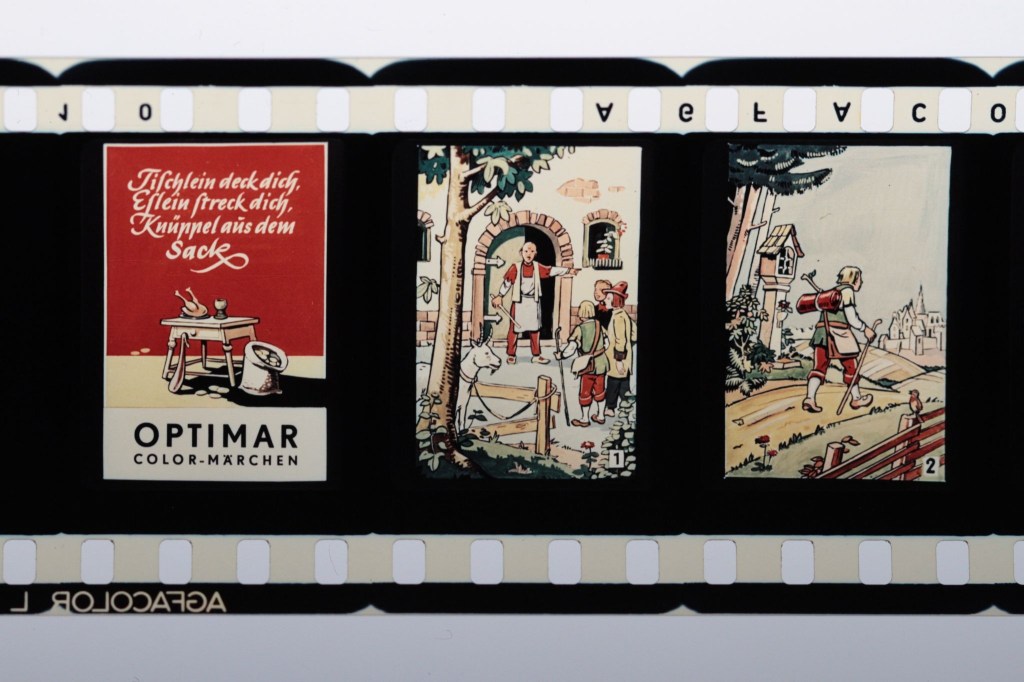
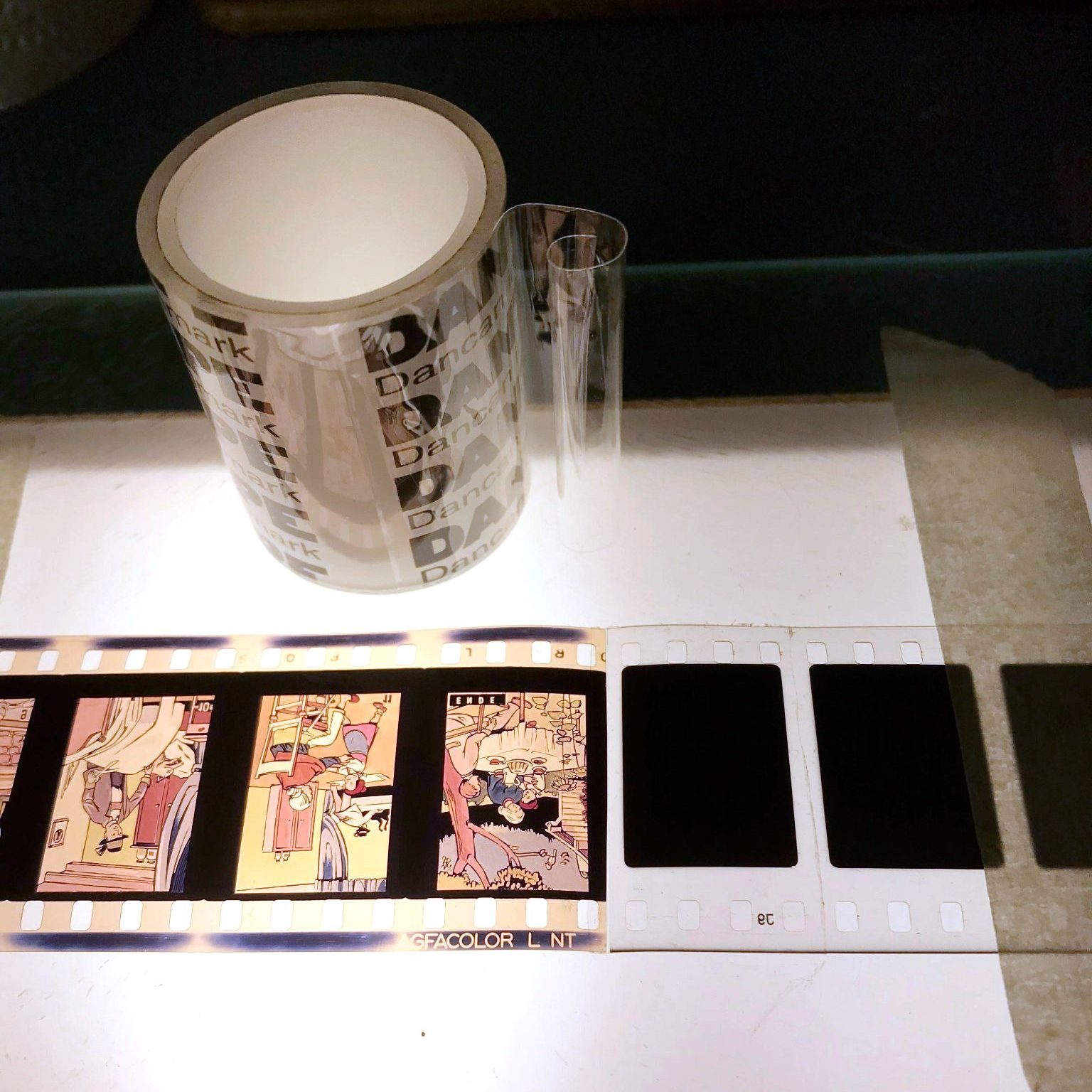
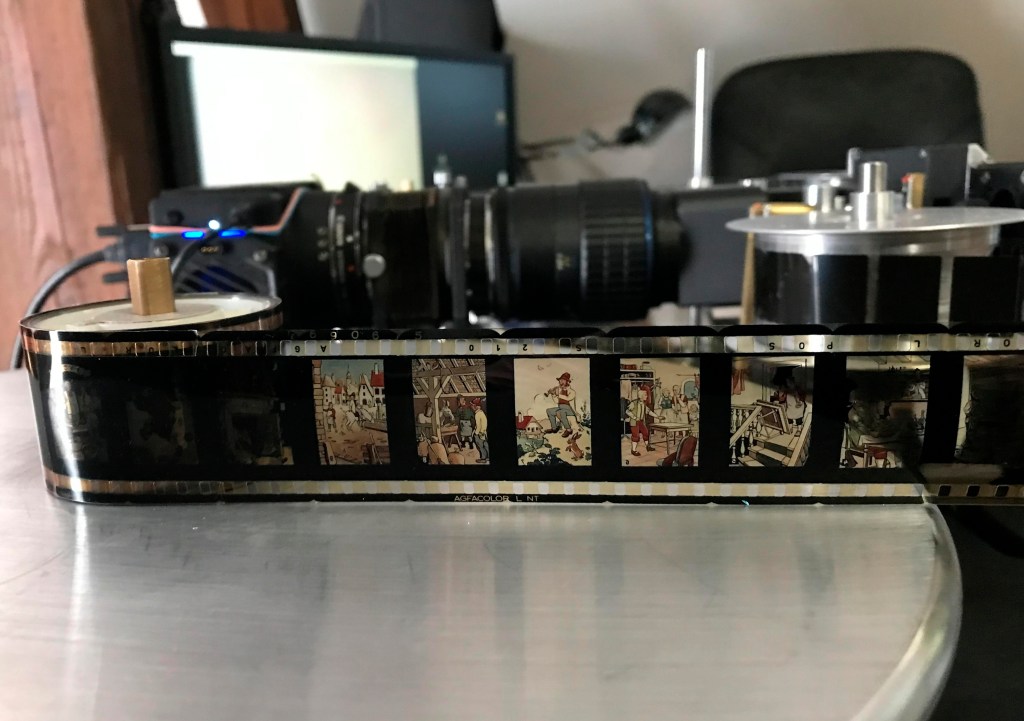
Nazanin Sharifan focused on digitizing Optimar Kinder-Kino films produced by Agfa, again utilizing Scan2Screen’s multispectral technology. These Agfacolor L NT chromogenic color positive films from the 1950s were designed for children’s slide-in projectors, forming short, flat 35mm film strips rather than continuous reels. This posed a technical challenge, as the Scan2Screen system requires continuous film transport to maintain mechanical stability and precision frame-by-frame capture. To address this, a custom sliding film holder was designed to stabilize individual frames and allow controlled manual movement without image vibration.
The primary practical solution involved splicing the individual Optimar film strips into a continuous film loop suitable for scanner transport. Professional splicing tape ensured precise alignment without marring the image area. Additionally, two longer blank polyester leader pieces were added to provide sufficient tension and stable guidance through the rollers. This strategy allowed for safe multispectral digitization without stressing the fragile triacetate material and adapted children’s projection film strips to a professional motion picture scanning workflow.
Working with Mr. Lutz Garmsen was one of the most inspiring parts of my project. His workshop had a uniquely warm and focused atmosphere, a space that naturally encouraged precision, curiosity, and thoughtful experimentation. Observing the scanning process up close and recognizing the level of technical care and sensitivity involved gave me a much deeper appreciation for what high-quality film digitization truly requires. Mr. Garmsen’s work thus reflects the broader research strategy of Professor Barbara Flueckiger, embodying a meaningful dialogue between academic research and practical application, something I found particularly inspiring. Being immersed in this environment clarified my professional vision more than anything else. It helped me see my future path with greater clarity and understand the level of precision, quality, and research-driven thinking which I want to pursue further in the field of historical film digitization and preservation.
Nazanin Sharifan
Our sincere thanks go to CEO Barbara Flueckiger and Lutz Garmsen at Scan2Screen for making this exciting teaching project possible and leading it!
Emma Kochta, Diana Nagy, Ulrich Ruedel, Nazanin Sharifan
KRG, HTW – University of Applied Sciences, Berlin
 Scan2Screen
Leave a comment