
Scan2Screen is proud to be contributing to a new digital restoration project dedicated to the outstanding experimental films of Len Lye, born in New Zealand in 1901 and widely recognized as one of the most innovative figures in avant-garde cinema and color film history.
In collaboration with San Francisco Film Preserve, this project brings together archival film elements held by the British Film Institute National Archive and other leading archives. Using Scan2Screen’s multispectral scanning technology, the films are digitized with exceptional accuracy, capturing the vibrancy, texture, and movement of Len Lye’s historic color techniques beyond the limits of traditional RGB-based scanning.
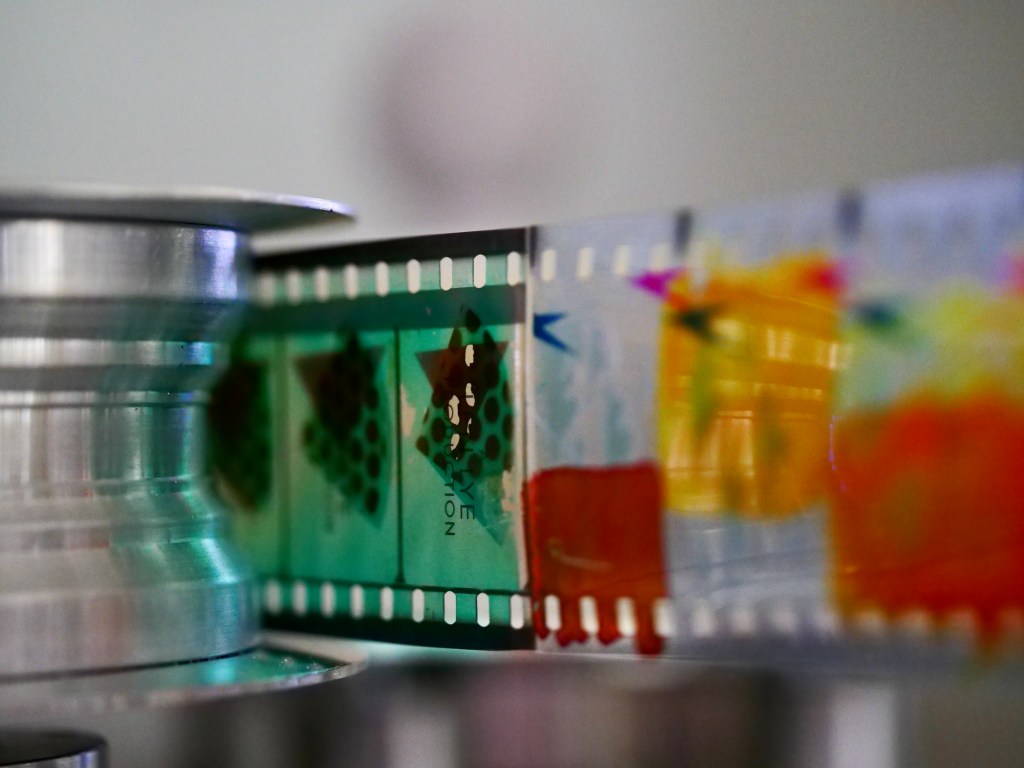
Original hand and stencil colored nitrate print test sequences
COLOUR FLIGHT TEST FILM (GBR 1937, Len Lye)
BFI National Archive on Scan2Screen’s multispectral scanner
The initial phase of the project focuses on four Len Lye creations conserved by the BFI:
- A COLOUR BOX (1935): 35mm Dufaycolor di-acetate print
- KALEIDOSCOPE (1935): 35mm Dufaycolor di-acetate print
- RAINBOW DANCE (1936): 35mm Gaspar Color nitrate print
- COLOUR FLIGHT TEST FILM (1938): original hand painted 35mm nitrate film
Two Dufaycolor films, A COLOUR BOX and KALEIDOSCOPE, presented particular challenges due to the material’s distinctive diagonal line screen, which required ultra-high resolution scanning at 9.6 K. The brittle condition of the di-acetate film stock further underscored the need for Scan2Screen’s careful mechanical layout, designed specifically for fragile archival materials.
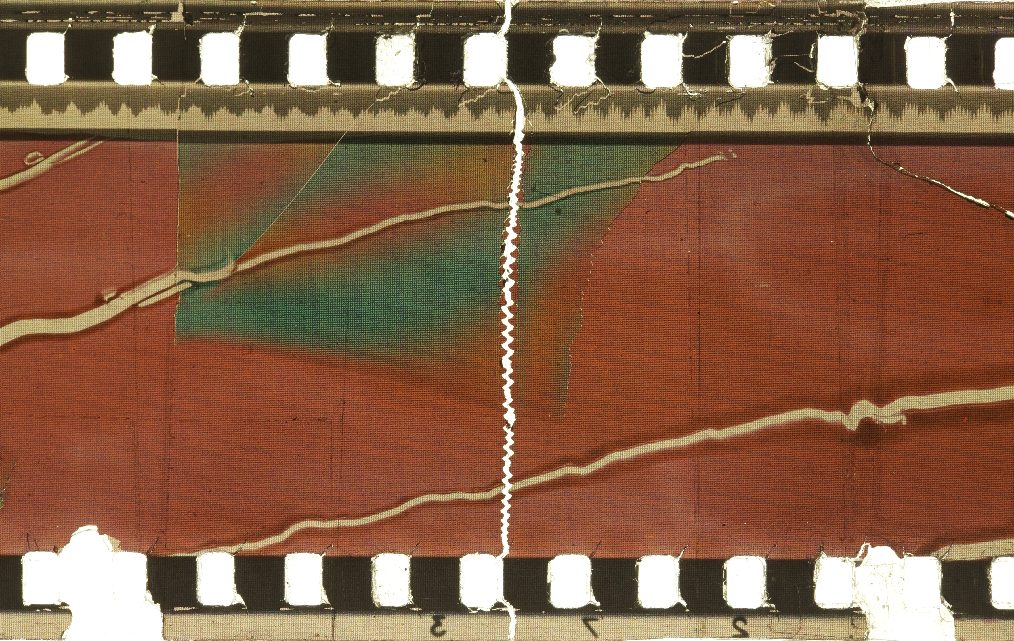
Brittle and broken condition of the Dufaycolor
di-acetate print of A COLOUR BOX (GBR 1935, Len Lye)
In the first phase of this project, Scan2Screen brought its mobile scanning technology to the BFI National Archive’s Conservation Centre in Berkhamsted with Scan2Screen’s Systems Engineer Lutz Garmsen. The BFI’s Head of Conservation, Kieron Webb, explained that “collaborative projects such as these are very welcome in the context of our forthcoming Moving Image Conservation Research lab, which opens in September. Colour research within moving image heritage science is one of the key aims of the lab.”
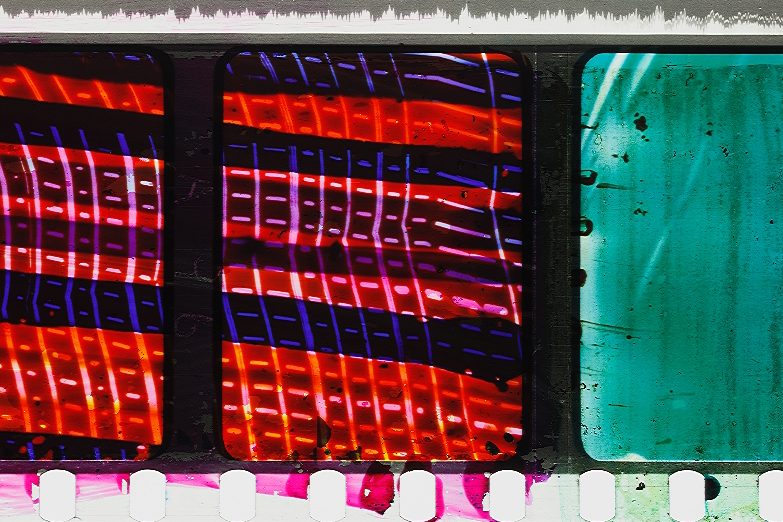
Credit: Museum of Modern Art Department of Film.
Photograph of the Technicolor dye-transfer nitrate print by Barbara Flueckiger
Len Lye was decades ahead of his time, working with newly developed color film processes such as Gasparcolor, Dufaycolor, and Technicolor in the 1930s. By applying hand and stencil coloring directly onto film strips, he created some of the most stunning examples of direct animation. These works were further enriched through bold compositing techniques that layered color in dynamic and unexpected ways. An artist who pushed the limits of film color techniques with such originality and ambition, Lye created a body of work that remains a treasure trove for anyone passionate about color and moving-image experimentation.
For this reason, Len Lye’s films have long been a central focus of Scan2Screen’s research. Our CEO Barbara Flueckiger has documented and analyzed multiple prints of Lye’s films at institutions including the Museum of Modern Art in New York, the Celeste Bartos Film Preservation Center in Pennsylvania, the BFI National Film Archive in London. Her research involved detailed examination of the films’ material and color properties, including colorimetric measurements and the creation of corresponding visualizations.
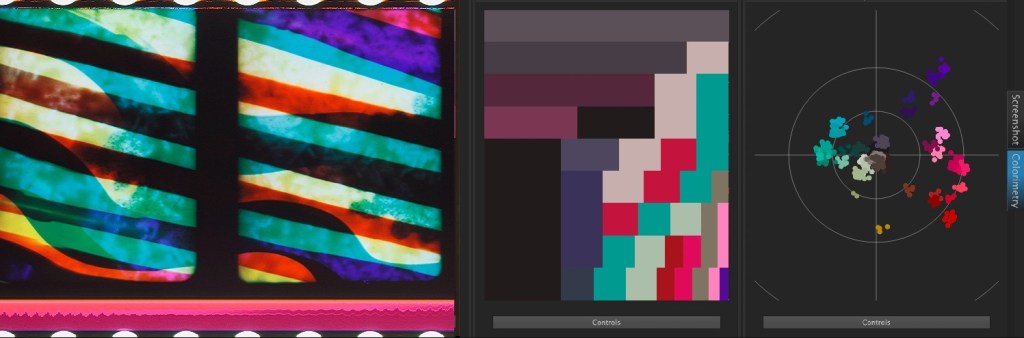
Colorimetric analysis and visualization of a
Gaspar Color print of COLOUR FLIGHT (GBR 1937, Len Lye),
executed with the film analysis and annotation software VIAN by Barbara Flueckiger
Evan Webb Award for Len Lye Research from the Len Lye Foundation:
“The Len Lye Foundation, which has represented Lye since his death in 1980, is delighted to announce a collaboration with Barbara Flueckiger, an international expert on film colour, in an ambitious project to restore Lye’s important historical films. The Foundation recently awarded its Evan Webb Prize for Lye Research to Professor Flueckiger. As part of the restoration project, she will visit New Zealand to explore archival material at the Govett-Brewster Art Gallery/Len Lye Centre in New Plymouth and material from the Ngā Taonga collection in Wellington. She will be employing her innovative Scan2Screen technology with the goal of restoring Lye’s films to their original brilliance. Working with the San Francisco Film Preserve, Flueckiger has built up a unique track record in restoring a variety of no-longer-current film formats, so that the results could become available to film audiences around the globe. Lye’s lively film work has a timeless appeal, but restoration is crucial for all historical material to remain vibrant. The Lye Foundation and the Govett-Brewster Art Gallery/Len Lye Centre are delighted to host Barbara Flueckiger’s film scanning project in New Zealand.”
Professor Roger Horrocks, Len Lye Foundation
Len Lye’s films are not only cinematic works, but physical objects shaped by unique color processes and hands-on experimentation. Preserving them requires a careful, future-oriented and sustainable approach that respects both their material complexity and artistic intent.
Once scanning is complete, the digital versions will be meticulously restored by the San Francisco Film Preserve. Len Lye’s hand-colored film works present unique challenges which require a highly conservative approach to restoration. This approach focuses exclusively on repairing physical damage that has occurred to the film material, such as breaks and tears, while not disturbing the original image or hallmarks Lye’s creations. According to Robert Byrne, president of San Francisco Film Preserve, “it will be impossible to use automatic tools for this restoration, our team will be meticulously working at the individual frame level to remediate and repair only the material damage the films have incurred since the time of their creation.”
Once complete, the restored works will be made accessible by San Francisco Film Preserve, supporting broader public engagement with these landmark films while ensuring their long-term preservation. “For the first time in generations”, explains SFFP executive director Kathy Rose O’Regan, “audiences will be able to truly and authentically experience Len Lye’s magical creations, with precise color fidelity, as the were originally created,”
Selected films from the project will also be included in the forthcoming exhibition Len Lye: Energies at the Govett-Brewster Art Gallery | Len Lye Centre in Aotearoa New Zealand, on view from 5 December 2026 to 26 April 2027.
At Scan2Screen, we believe that preservation is not just about digitizing the past; it’s about creating the conditions for future audiences to experience films as fully and faithfully as possible. We’re honored to support this important effort.
References:
See galleries of Len Lye’s films on the Timeline of Historical Colors in Photography and Film.
 Scan2Screen
Leave a comment