
Kieron Webb and the British Film Institute (BFI ) National Archive recently received a prestigious RICHeS grant to establish the BFI’s Moving Image Conservation Research Laboratory (MICRL), funded by the Arts and Humanities Research Council (AHRC), part of UK Research and Innovation (UKRI).
The BFI’s new lab will cooperate with Scan2Screen to advance excellence and new methods in heritage and conservation science.
Scan2Screen is honored to be featured in the latest Inside the Archive post from the British Film Institute (BFI) National Archive.
The post highlights Scan2Screen’s recent scanning residency at the BFI’s John Paul Getty Jr. Conservation Centre in London / Berkhamsted. This project marks the latest chapter in a longstanding partnership rooted in shared values: scientific rigor, material sensitivity, and a passion for the visual language of color film.
A Partnership Years in the Making
The BFI has collaborated with Scan2Screen CEO Barbara Flueckiger for over a decade, through research exchanges, joint conference presentations, and shared contributions to the International Colour in Film Conference. These ongoing efforts, alongside partners like Elza Tantcheva-Burdge / The Colour Group (GB) and Urich Ruedel / HTW Berlin, have laid critical groundwork for a more conservation-focused and scientifically robust approach to digitizing historical color film.
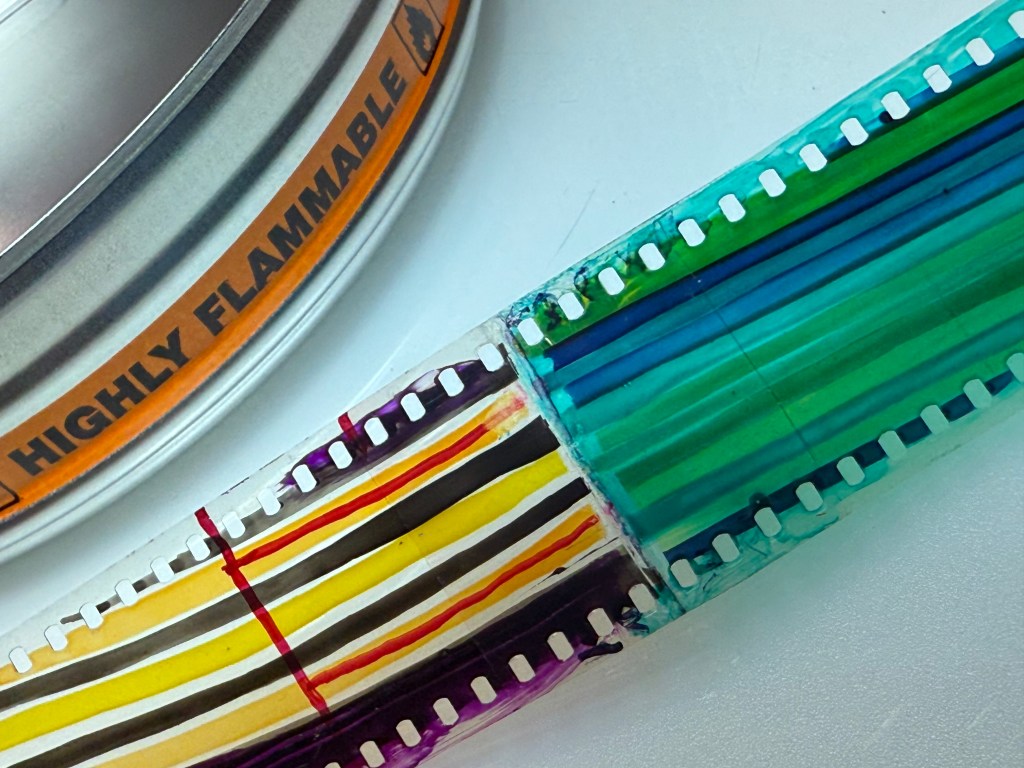
This summer’s work at the BFI built directly on that foundation. Working closely with Film Conservation Manager Elena Nepoti and her team, Barbara and Systems Engineer Lutz Garmsen brought Scan2Screen’s multispectral scanner from California to the UK to digitize rare and delicate color films, including spectacular hand-coloring in CHANGING HUES (1922) and the 1905 hand-colored nitrate film LOÏE FULLER.
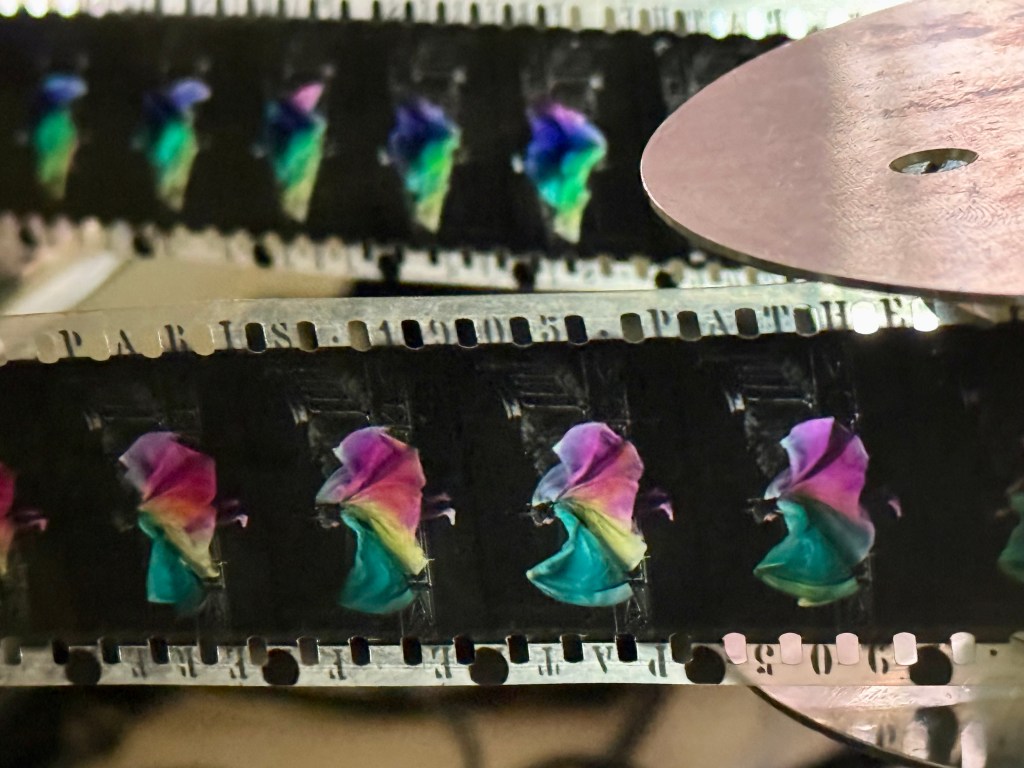
Scan2Screen’s multispectral scanning at the BFI National Archive
Why Multispectral Matters
“Describing, caring for and reproducing those colours is an endlessly engaging aspect of our work at the BFI National Archive,” the blog notes. Multispectral scanning, it adds, “is a crucial research topic” for the BFI’s forthcoming Moving Image Conservation Research Laboratory:
“Developed by an interdisciplinary team of scientists and film restoration specialists, Scan2Screen’s multispectral scanner captures the full colour spectrum present in historical films using both diffuse and directional illumination. In short, it scans each film frame seven times with LEDs that together represent the full visible spectrum and infrared light. This allows for accurate recording of the dyes used throughout cinema history.
But colour is also greatly affected by the light of the film projector and this has changed over time. Scan2Screen’s rendering software synthesises the multispectral scans based on spectral measurements of cinema projection lights, allowing for digital representations that closely resemble how these films would have appeared in their original theatrical screenings.
The system is purpose-built for archival material, including delicate nitrate films, using a gentle, low-tension transport mechanism that minimises handling. As a result, most films can be scanned with no preparation beyond optional cleaning, preserving their integrity while streamlining the process. In addition to digitisation, the film elements are closely examined in detail for their material composition and aesthetic properties, supporting a comprehensive documentation approach.”
Elena Nepoti, Film Conservation Manager
and Kieron Webb, Head of Conservation, BFI National Film Archive
We’re proud that our work is contributing to this new wave of archival research and helping institutions unlock the full potential of their collections.
Looking Ahead
This project is a major step toward integrating Scan2Screen’s multispectral digitization workflow into broader archival practices and methods. It stands as a model for how international collaboration, interdisciplinary research, and purpose-built tools can reimagine what’s possible in film preservation.
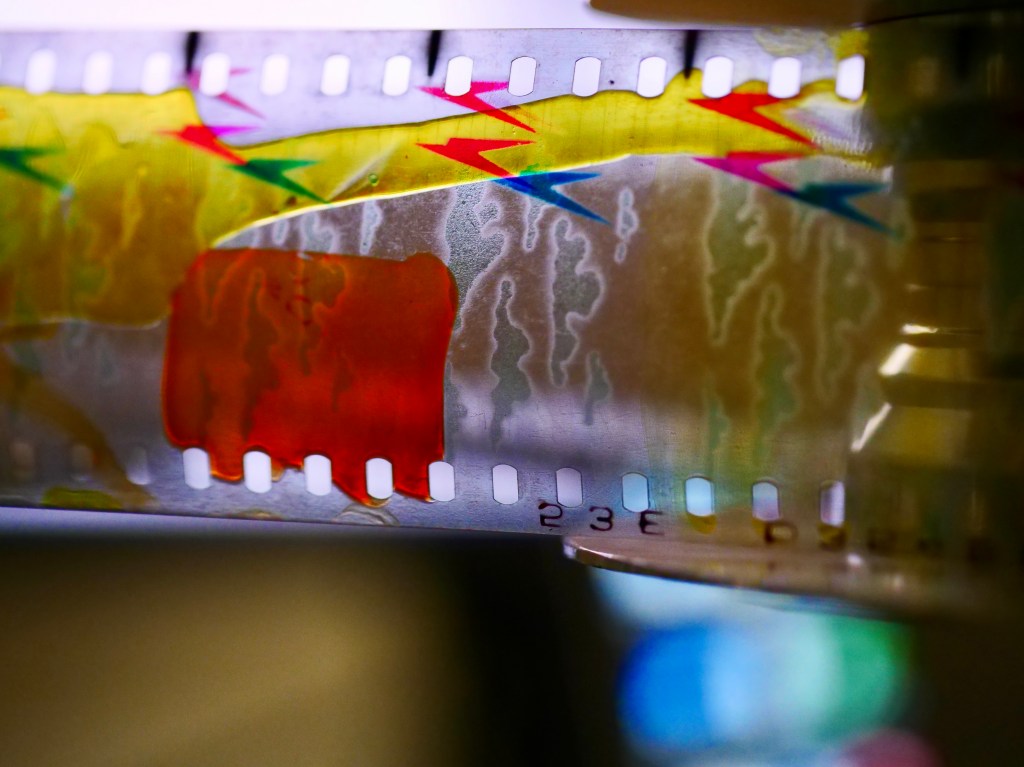
Scan2Screen’s multispectral scanning at the BFI National Archive
We are deeply grateful to Kieron Webb, Elena Nepoti, and the entire BFI conservation team for their trust and generosity.
We look forward to continued collaborations as MICRL opens its doors and new questions emerge around how best to document, preserve, and re-experience the brilliant, fragile world of historical film color.
Read the full BFI blog post:
Inside the Archive – Week 34: What is Multispectral Scanning

 Scan2Screen
Leave a comment