
At Scan2Screen, when we say no preparation is needed for scanning, we mean it.
Our multispectral scanner can handle even the most damaged, warped, or shrunken films without issue. For the Color in Motion exhibition at the Academy Museum, we scanned 73 fragments of nitrate film – some with shrinkage up to 4-5% and others heavily warped. In the most extreme cases, entire sections of perforations were missing, yet the films still ran smoothly, thanks to our optical control film transport system.
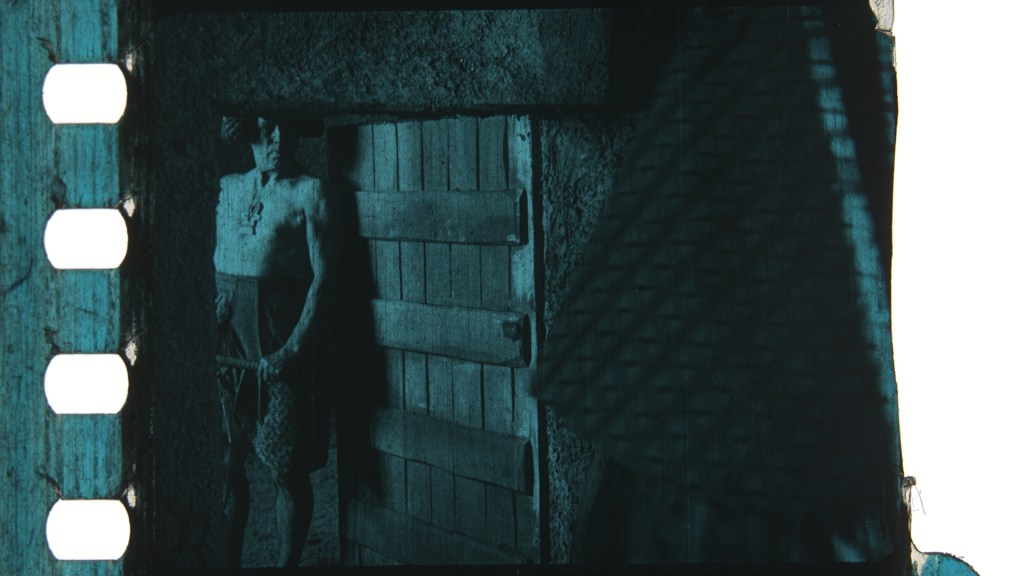

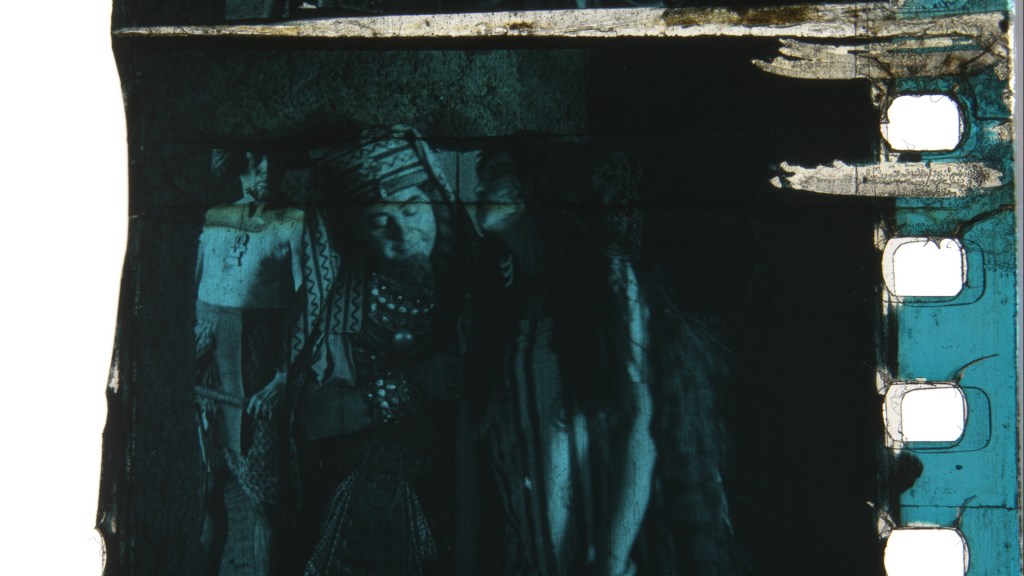
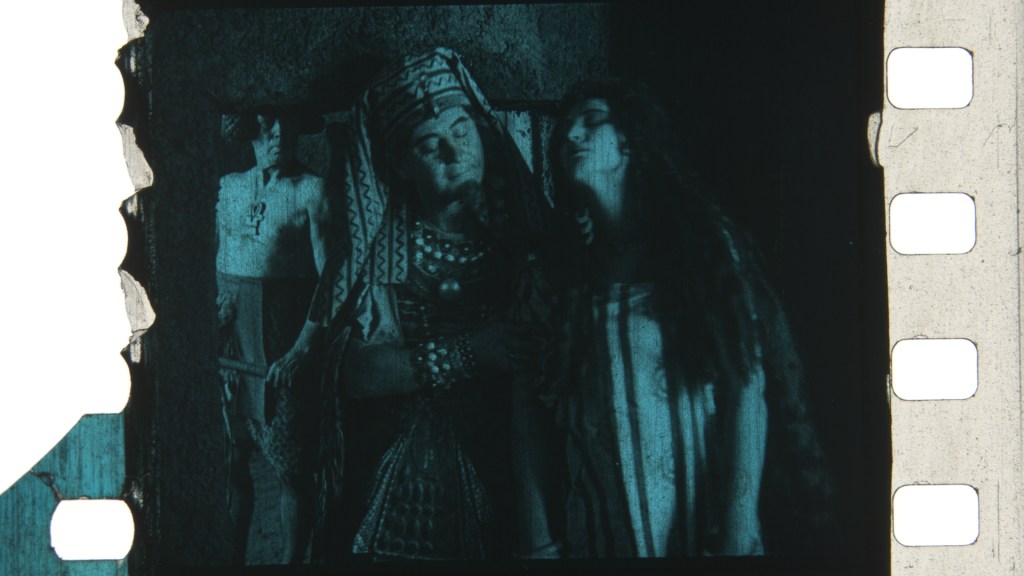
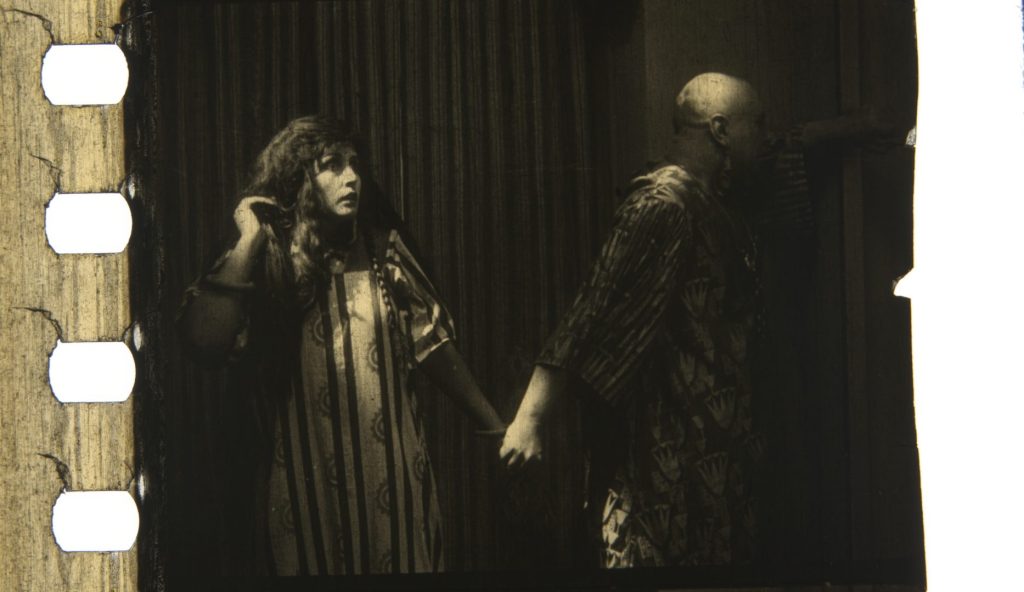
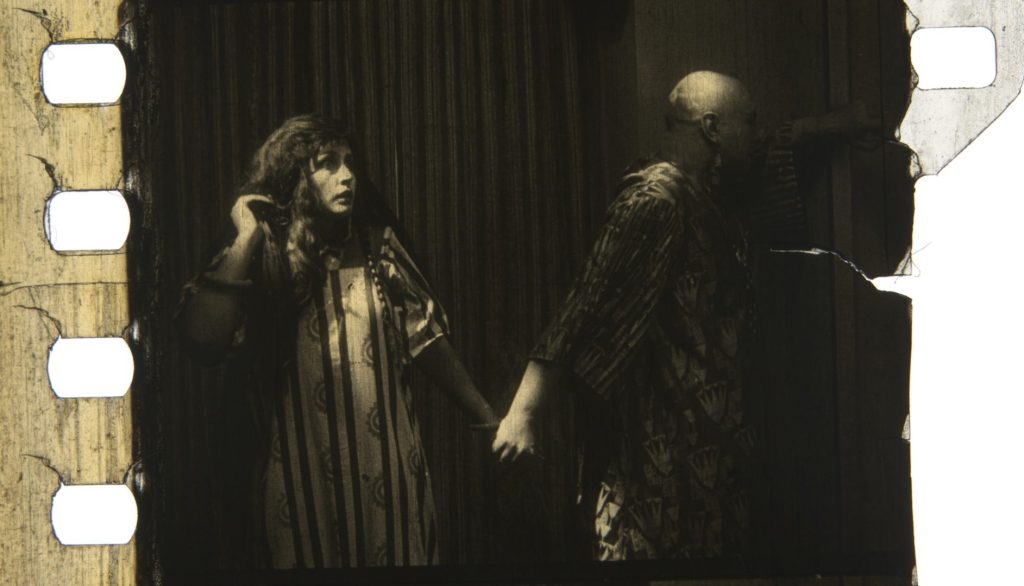
This tinted nitrate print of DAS WEIB DES PHARAO (GER 1922, Ernst Lubitsch)
showed severe perforation damage, but still went smoothly
through Scan2Screen’s multispectral scanner.
Credit: Bundesarchiv Filmarchiv.
For films so brittle they risk falling apart entirely, we use a specialized upright table to scan them manually, frame by frame, with our unique multispectral technology. One such project is currently in preparation. Stay tuned!
Unlike many scanners that require preparation – such as reopening splices or taping perforations – Scan2Screen’s process avoids these interventions, which can be both damaging and ethically problematic. Film preparation often erases historical evidence, and in some cases, the damage is irreversible.
That said, one form of preparation remains both possible and recommended: gently removing excess dirt or mold for a cleaner, more visually striking result.
With Scan2Screen, you can trust that your films are scanned as they are – without unnecessary risk.
Get in touch and fill out our questionnaire to see how Scan2Screen can create beautiful scans from your most fragile holdings.
 Scan2Screen
Leave a comment